Directive 2014/34/EU – ATmosphères EXplosibles (ATEX)
3 minutes


Structured Assessment Logic (SAL) – Your Roadmap for Compliance
SAL Type IV - Safety Architecture Framework – NLF-based Risk-Specific Safety Framework with classification logic
Mapping of ATEX 2014/34/EU
The SAL comprises the following steps:
Product qualification – Is the product actually within the scope of the Directive 2014/34/EU?
Classification – Which group and category does the product fall under? Classification (group and category according to ATEX) is required for equipment, as well as for assemblies that are placed on the market as functional units and therefore qualify as equipment in their own right.
Selection of the conformity assessment procedure – Self-assessment, EU Type-Examination or Unit Verification.
Identification of relevant requirements listed in Annex II – Which essential requirements apply to the product?
Assessment of harmonised standards and, where necessary, other means of fulfilment where such standards are not applied or do not exist – Which standards cover the requirements, and where are there gaps?
Technical documentation – Which records demonstrate compliance?
Information and marking obligations
Series Production – How is ongoing conformity ensured? Conformity is not limited to design and initial assessment; it must also be maintained throughout ongoing production. In practice, this means identifying and controlling those product and process characteristics whose deviation could compromise compliance with the essential requirements.
EU Declaration of Conformity & CE marking – Official confirmation of compliance, ready for the EU market.
Note: SAL is not an end in itself. It provides a repeatable methodology that translates regulatory principles into a clear, structured assessment logic. This diagram illustrates the SAL workflow visually:
Product qualification
↓
Classification
↓
Conformity assessment procedure
↓
Identification of relevant requirements listed in Annex II
↓
Harmonised standards / other means of fulfilment
↓
Technical documentation
↓
Information and marking obligations
↓
Series Production
↓
CE marking, specific markings & Declaration of Conformity
Interfaces to Related Legislation
When applying ATEX 2014/34/EU, there are often intersections with other regulatory frameworks that must be considered simultaneously:
Electrical safety legislation
Electromagnetic compatibility (EMC) legislation
Sector-specific regulations for connected products
Machinery Directive and Regulation (2006/42/EC - (EU) 2023/1230)
A coordinated assessment is therefore necessary to avoid regulatory gaps or duplicated evaluations. In practice, this means SAL provides the roadmap, but it must always be applied in the context of related legislation, including machinery and other applicable directives.
Overview: Directive 2014/34/EU
Number: 2014/34/EU
Title: Directive on equipment and protective systems intended for use in potentially explosive atmospheres
Publication: OJ L 96, 29.3.2014, p. 309
Purpose: ATEX equipment and protective systems can only be sold in the EU if they meet Directive 2014/34/EU, which ensures safety by controlling ignition sources and minimizing explosion risks.
Public interest: Product safety, with particular emphasis on protection against explosion hazards
Guidance: European Commission’s detailed annotation article by article: ATEX 2014/34/EU Guidelines
Scope
The Directive applies to:
Equipment and protective systems intended for use in potentially explosive atmospheres.
Safety, control, and regulating devices intended for use outside such atmospheres but necessary for, or contributing to, the safe operation of this equipment with regard to explosion risks.
Components intended to be incorporated into such equipment and protective systems.
The Directive does not cover, for example:
Medical devices intended for use in a medical environment.
Equipment where the explosion hazard arises solely from explosive or unstable chemical substances.
Equipment for domestic, non-commercial use where explosive atmospheres may occur only rarely and only due to accidental fuel-gas leakage.
Personal protective equipment covered by Regulation (EU) 2016/425.
Seagoing vessels, mobile offshore units, and equipment on board them.
Means of transport (and their trailers) intended solely for transporting passengers or goods by air, road, rail, or water networks (However, vehicles designed for use in potentially explosive atmospheres are not excluded).
Classification
Directive 2014/34/EU classifies equipment into two groups.
To select the correct conformity assessment procedure, the manufacturer must determine - based on the intended use - which group and category the product falls into. Each group is further subdivided into categories reflecting the level of protection required.
Equipment Group I
Equipment intended for use in underground parts of mines, and in associated surface installations, where firedamp and/or combustible dust may be present.
Includes Categories M1 and M2 (Annex I).
Equipment Group II
Equipment intended for use in all other locations that may be endangered by explosive atmospheres.
Includes Categories 1, 2, and 3 (Annex I).
Conformity Assessment Procedures
Manufacturers must select the appropriate procedure according to Article 13 and Annexes IV–IX.
The applicable conformity assessment procedure under Directive 2014/34/EU depends on the equipment group and category:
Categories M1 and 1 (Groups I & II – highest risk):
EU-type examination (Annex III) plus either
production process quality assurance (Annex IV), or
product verification (Annex V).
Categories M2 and 2 (Groups I & II):
For internal combustion engines and electrical equipment:
EU-type examination (Annex III) plus either
internal production control with supervised testing (Annex VI), or
product quality assurance (Annex VII).
For other equipment:
Internal production control (Annex VIII).
Category 3 (Group II – lower risk):
Internal production control only (Annex VIII) with technical documentation lodged with a Notified Body.
Optional alternative (all groups/categories):
Unit verification (Annex IX) may be used instead of the above routes.
Additional Provisions
Protective systems must follow the procedures for Categories M1/1 or unit verification.
Components are assessed similarly but do not receive CE marking; instead, the manufacturer issues a written attestation of conformity.
For certain safety aspects (Annex II, 1.2.7), internal production control (Annex VIII) may also be applied as a supplementary route.
Essential Requirements under Annex II
The essential health and safety requirements are related to design and construction characteristics as are defined in Annex II to the Directive.
Harmonised Standards
Technical specifications facilitating compliance
Use provides a presumption of conformity
Developed by recognised European standardisation organisations
Referenced in the Official Journal of the EU
Information and Marking Obligations
Identification and manufacturer marking
User manual and safety information
Series Production
The requirement for ongoing conformity is implemented in practice by ensuring that manufacturers identify and keep under control those product and process characteristics whose deviation could jeopardize compliance with the legal requirements.
This requires a systematic management of safety- and compliance-critical characteristics, defining how these characteristics are identified, monitored, controlled, and protected against unintended change.
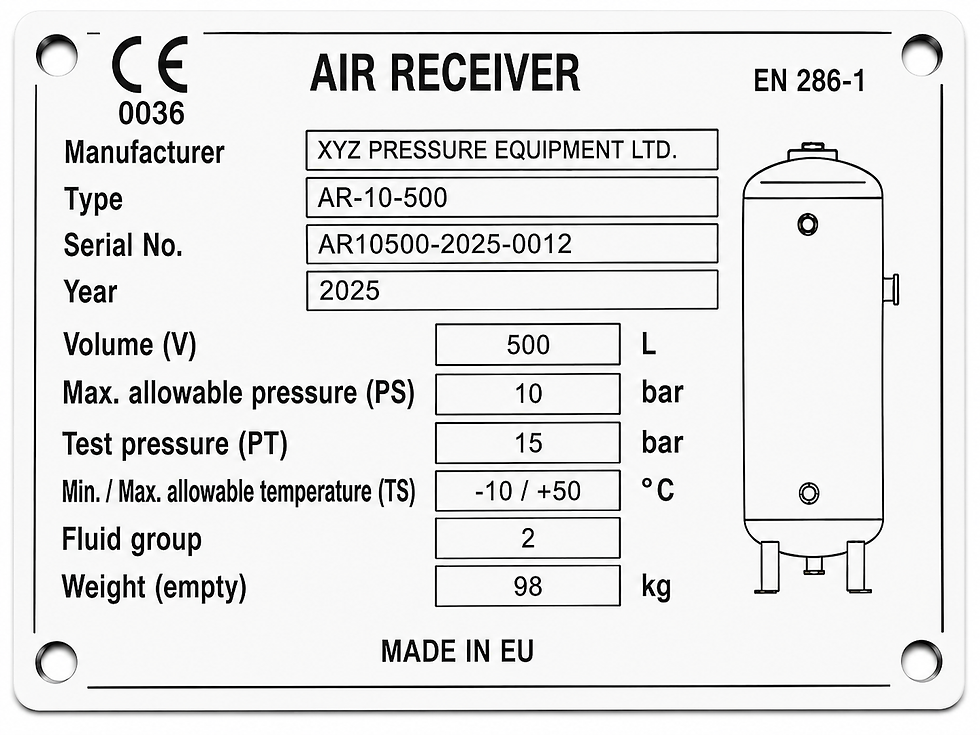
CE Marking and specific explosion protection marking (εx)
Mandatory before placing the product on the EU market
Must be visible, legible, and permanent
Notified Body number required if involved
Specific marking of explosion protection and the symbols of the equipment-group and category and, where applicable, the other markings and information included in point 1.0.5 of Annex II
Conclusion
With SAL, the mapping as a roadmap, and consideration of interfaces to related legislation, it becomes clear how ATEX 2014/34/EU is systematically applied. The final workflow logically follows from scope through requirements, standards, and assessment procedures to CE marking – providing a clear orientation for manufacturers, assessors, and all stakeholders seeking regulatory clarity.
You might also be interested in these articles:



© 2026 by Rechtsanwalt Dr. Matthias K Bauer