Directive 2014/35/EU — Low Voltage Directive (LVD)
4 minutes


Structured Assessment Logic (SAL) – Your Roadmap for Compliance
SAL Type I – Safety Architecture Framework – NLF-based Comprehensive Safety Framework
Mapping of LVD 2014/35/EU
The SAL comprises the following steps:
Product qualification – Is the product actually within the scope of the LVD?
Selection of the conformity assessment procedure – Module A (self-assessment)
Under the LVD, manufacturers use a single procedure, Module A, to ensure that their electrical equipment meets the essential safety requirements. This involves carrying out internal checks and maintaining the technical documentation necessary to demonstrate compliance.
Risk assessment – Identification of relevant safety objectives listed in Annex I – Which safety objectives apply to the equipment?
The risk assessment is required not only to evaluate and mitigate hazards, but also to identify which of the Annex I safety objectives are relevant to the specific equipment, based on its design, intended use, and reasonably foreseeable conditions of use.
Assessment of harmonised standards and, where necessary, other means of fulfilment where such standards are not applied or do not exist – Which standards cover the requirements, and where are there gaps?
Technical documentation – Which records demonstrate compliance?
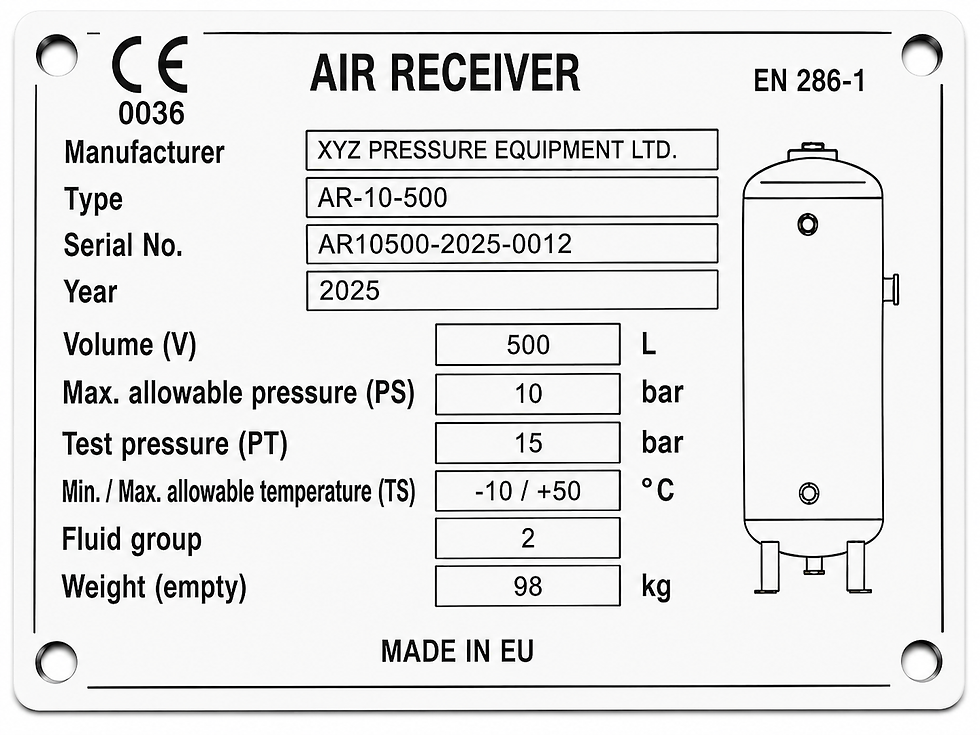
Information and marking obligations
Series Production – How is ongoing conformity ensured?
Conformity is not limited to design and initial assessment; it must also be maintained throughout ongoing production. In practice, this means identifying and controlling those product and process characteristics whose deviation could compromise compliance with the safety objectives and, therefore, with the legal requirements.
EU Declaration of Conformity & CE marking – Official confirmation of compliance, ready for the EU market.
Note: SAL is not an end in itself. It provides a repeatable methodology that translates regulatory principles into a clear, structured assessment logic.
This diagram illustrates the SAL workflow visually:
Product definition
↓
Safety objectives listed in Annex I
↓
Harmonised standards / other means of fulfilment
↓
Conformity assessment procedure
↓
Technical documentation
↓
Information and marking obligations
↓
Series Production
↓
CE marking & Declaration of Conformity
Interfaces to Related Legislation
When applying LVD 2014/35/EU, there are often intersections with other regulatory frameworks that must be considered simultaneously:
Radio equipment legislation
Electromagnetic compatibility (EMC) legislation
Sector-specific regulations for connected products
A coordinated assessment is therefore necessary to avoid regulatory gaps or duplicated evaluations. In practice, this means SAL provides the roadmap, but it must always be applied in the context of related legislation.
Overview: Directive 2014/35/EU
Number: 2014/35/EU
Title: Directive relating to the making available on the market of electrical equipment designed for use within certain voltage limits
Publication: OJ L 96, 29.3.2014, p. 357
Purpose: Establishes a framework for placing electrical equipment on the market
Public interest: Product safety
Guidance: Guidelines on LVD 2014/35/EU: LVD 2014/35/EU - Guidelines
Scope
The Directive applies to electrical equipment (including some components intended for incorporation into other equipment) designed for the use with a voltage rating:
• between 50 and 1000 V for alternating current;
• between 75 and 1500 V for direct current.
In particular, products such as electrical appliances, lighting equipment, electric wiring, appliance couplers and cord sets, or electrical installation equipment, are covered by the Directive.
Equipment outside the scope of the Directive is listed in Annex II to the Directive.
For “combined products,” see the Supplementary Guidance on the LVD/EMCD/RED.
Conformity Assessment Procedures
Module A (self-assessment).
Manufacturer obligations:
Identification of applicable requirements
Demonstration of compliance
Documentation of applied standards
Preparation of the EU Declaration of Conformity
Affixing the CE marking
Retention of documentation for 10 years
Safety objectives under Annex I
The essential safety objectives in Annex I define how electrical equipment must be designed and constructed to ensure safe use and protect users, domestic animals, and property. Key points include:
Protection against electrical hazards – prevent electric shocks and related risks
Mechanical safety – prevent injuries from moving parts or structural failures
Thermal protection – prevent burns, overheating, or fire
Radiation, noise, and vibration – minimize harmful emissions and ensure safe operation
Safe installation and use – allow correct assembly, connection, and foreseeable use without danger
Note: For practical guidance on interpreting these safety objectives and performing a risk-based assessment, see CENELEC Guide 32, Annex A (link to guide PDF). This guide complements Annex I by providing detailed hazard categories and risk mitigation principles.
Harmonised Standards
Technical specifications facilitating compliance
Use provides a presumption of conformity
Developed by recognised European standardisation organisations
Referenced in the Official Journal of the EU
Summary of references of harmonised standards published in OJEU – Directive 2014/35/EU
Information and Marking Obligations
Identification and manufacturer marking
User manual and safety information
Series Production
The requirement for ongoing conformity is implemented in practice by ensuring that manufacturers identify and keep under control those product and process characteristics whose deviation could jeopardize compliance with the legal requirements.
This requires a systematic management of safety- and compliance-critical characteristics, defining how these characteristics are identified, monitored, controlled, and protected against unintended change.
CE Marking
Mandatory before placing the product on the EU market
Must be visible, legible, and permanent
Conclusion
With SAL, the mapping as a roadmap, and consideration of interfaces to related legislation, it becomes clear how LVD 2014/35/EU is systematically applied. The final workflow logically follows from scope through requirements, standards, and assessment procedures to CE marking – providing a clear orientation for manufacturers, assessors, and all stakeholders seeking regulatory clarity.
You might also be interested in these articles:



© 2026 by Dr. Matthias K Bauer