Regulation (EU) 2023/1230 — Machinery Regulation (MR)
5 minutes


Structured Assessment Logic (SAL) – Your Roadmap for Compliance
SAL Type II(b) – Safety Architecture Framework – NLF-based Comprehensive Safety Framework with non-structural (partial) classification logic
Mapping of MR (EU) 2023/1230
The SAL comprises the following steps:
Product qualification – Is the product actually within the scope of the MR?
In the following, the term “product” refers to machinery, related products and partly completed machinery within the meaning of MR (EU) 2023/1230.
Risk assessment – Identification of relevant essential health and safety requirements set out in Annex III – Which requirements apply to the product?
The risk assessment is required not only to evaluate and mitigate hazards, but also to identify which of the Annex III requirements are relevant to the product, based on its design, intended use, and reasonably foreseeable conditions of use.
Assessment of harmonised standards and Common Specifications and, where necessary, other means of fulfilment where such standards or specifications are not applied or do not exist – Which standards or specifications cover the requirements, and where are there gaps?
Selection of the conformity assessment procedure – Self-assessment, EU Type-Examination, Full Quality Assurance or Unit Verification.
Technical documentation – Which records demonstrate compliance?
Information and marking obligations
Series Production – How is ongoing conformity ensured?Conformity is not limited to design and initial assessment; it must also be maintained throughout ongoing production. In practice, this means identifying and controlling those product and process characteristics whose deviation could compromise compliance with the safety objectives and, therefore, with the legal requirements.
EU Declaration of Conformity & CE marking – Official confirmation of compliance, ready for the EU market.
Note: SAL is not an end in itself. It provides a repeatable methodology that translates regulatory principles into a clear, structured assessment logic.
This diagram illustrates the SAL workflow visually:
Product definition
↓
Essential health and safety requirements set out in Annex III
↓
Harmonised standards and common specifications / other means of fulfilment
↓
Conformity assessment procedure
↓
Technical documentation
↓
Information and marking obligations
↓
Series Production
↓
CE marking & Declaration of Conformity / Declaration of Incorporation
Interfaces to Related Legislation
When applying MR (EU) 2023/1230, there are often intersections with other regulatory frameworks that must be considered simultaneously:
legislation addressing specific technical risks (e.g. explosive atmospheres or pressure hazards)
legislation governing electrical and electromagnetic aspects (e.g. low-voltage or EMC requirements)
product-specific regulatory frameworks applicable to particular categories of equipment
A coordinated assessment is therefore necessary to avoid regulatory gaps or duplicated evaluations. In practice, this means the Machinery Regulation provides the core safety framework for machinery, but it must always be applied in the context of related legislation.
Overview: Regulation (EU) 2023/1230
Number: (EU) 2023/1230
Title: Regulation on machinery
Publication: OJ L 165, 29.6.2023, p. 1
Purpose: Establishes a framework for placing machinery, related products and partly completed machinery on the market
Public interest: Product safety
Scope
MR (EU) 2023/1230 applies to machinery, related products (interchangeable equipment, safety components, lifting accessories, chains/ropes/webbing and removable mechanical transmission devices) and partly completed machinery.
The Regulation does not apply to certain specific categories of equipment, in particular:
spare safety components supplied by the original manufacturer,
equipment for fairgrounds and amusement parks,
machinery used in nuclear installations where nuclear safety could be affected,
weapons,
most means of transport and their regulated components (e.g. aircraft, motor vehicles, tractors or rail vehicles), except machinery mounted on them,
seagoing vessels and offshore units,
machinery designed for military or police purposes, research prototypes for temporary laboratory use, and certain specialised equipment (e.g. mine winding gear or stage machinery for moving performers),
a number of electrical and electronic products already covered by other EU legislation, such as household appliances, IT equipment or electric motors.
Essential health and safety requirements (EHSR) under Annex III
The essential health and safety requirements in Annex III define how machinery, related products, and partly completed machinery must be designed and constructed to ensure safe operation throughout their lifecycle. Key points, reflecting the Annex III structure, include:
Design and construction to eliminate or reduce hazards – inherently safe design, protective measures, and safeguarding to minimize risks.
Control systems and functional safety – reliable, failsafe operation; prevention of dangerous failures or unintended movements.
Mechanical stability and safety of moving parts – prevent crushing, cutting, entanglement, falls, or structural failures.
Electrical, hydraulic, pneumatic, thermal, and other energy hazards – protect users from shocks, burns, overheating, or energy release.
Human interaction and ergonomics – account for operator capabilities, foreseeable misuse, human error, and safe access for maintenance.
Emissions, environmental hazards, and hazardous substances – limit noise, vibration, radiation, chemicals, or other harmful effects.
Software integrity and cybersecurity – protect safety-relevant software, control systems, and data from accidental or intentional corruption, manipulation, or misuse; ensure safe operation of connected and AI-enabled machinery.
Safe installation, transport, maintenance, and lifecycle management – ensure correct assembly, operation, servicing, modifications, and decommissioning without danger.
Harmonised Standards and Common Specifications
Technical specifications facilitating compliance
Their use provides a presumption of conformity
Developed by recognised European standardisation organisations (Harmonised Standards) or by the European Commission (Common Specifications)
Harmonised Standards are officially referenced in the EU Official Journal, while Common Specifications are published in Commission implementing Regulations
Summary of references of harmonised standards published in OJEU – Directive 2006/42/EU
Note: Continuation of harmonised standards published under MD 2006/42/EC pursuant to Article 51(2) of Regulation (EU) 2023/1230.
Conformity Assessment Procedures
Manufacturers must carry out a conformity assessment procedure for machinery or related products. The applicable procedure depends on whether the product is listed in Annex I:
Annex I Part A: EU type-examination followed by internal production control, full quality assurance, or unit verification.
Annex I Part B: The same procedures as for Part A apply. Internal production control alone is allowed if harmonised standards or common specifications covering all relevant requirements are fully applied; otherwise one of the other procedures must be used.
Not listed in Annex I: Internal production control is sufficient.
Note: Partly completed machinery is not subject to a conformity assessment procedure.
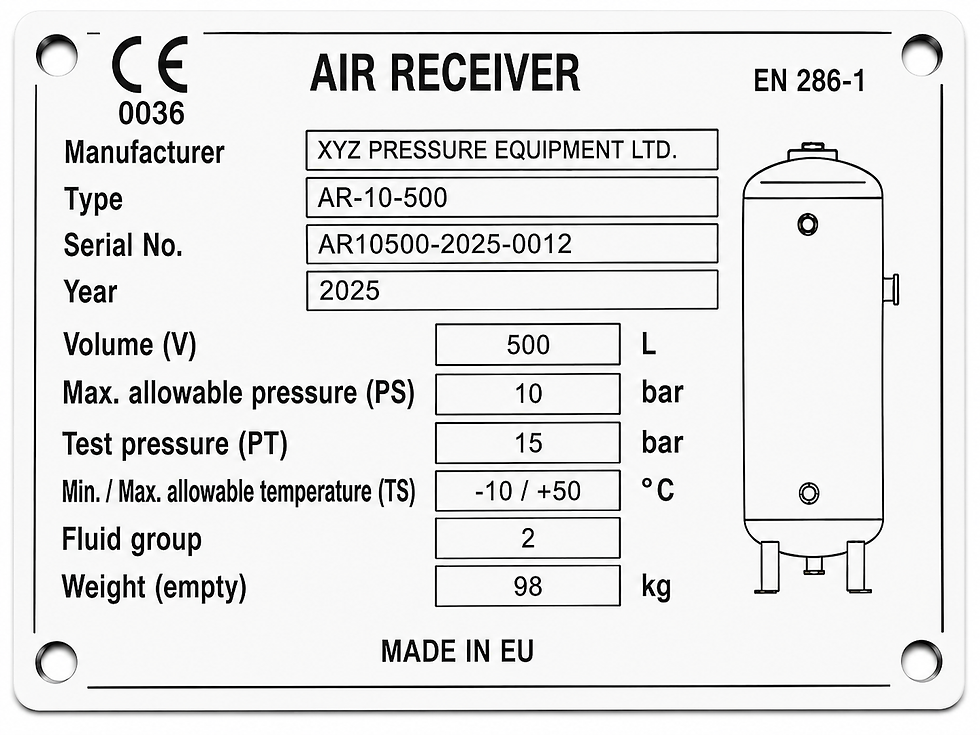
Information and Marking Obligations
Identification and manufacturer marking
User manual and safety information
Assembly instructions (for partly completed machinery)
Series Production
The requirement for ongoing conformity is implemented in practice by ensuring that manufacturers identify and keep under control those product and process characteristics whose deviation could jeopardize compliance with the legal requirements.
This requires a systematic management of safety- and compliance-critical characteristics, defining how these characteristics are identified, monitored, controlled, and protected against unintended change.
CE Marking
Mandatory before placing the product on the EU market
Must be visible, legible, and permanent
Notified Body number required if involved
Conclusion
With SAL, the mapping as a roadmap, and consideration of interfaces to related legislation, it becomes clear how MR (EU) 2023(1230 is systematically applied. The final workflow logically follows from scope through requirements, standards, and assessment procedures to CE marking – providing a clear orientation for manufacturers, assessors, and all stakeholders seeking regulatory clarity.
You might also be interested in these articles:



© 2026 by Dr. Matthias K Bauer